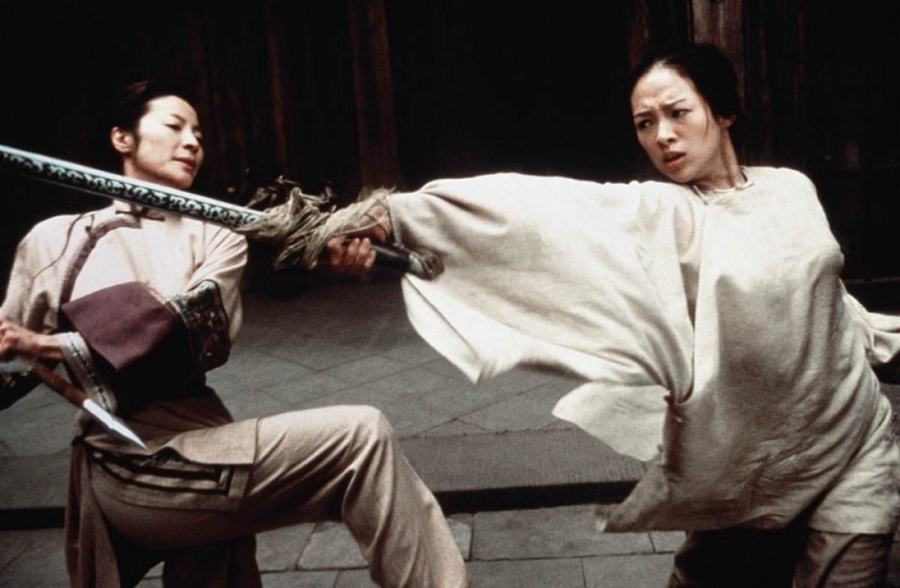
Crouching Tiger, Hidden Dragon
Overview
Crouching Tiger, Hidden Dragon is a 2000 martial arts film directed by Ang Lee, the first Chinese-language film to win an Academy Award for Best Foreign Language Film. Set in the late Qing Dynasty (1644-1911), the movie tells the story of two generations of warriors, achieving both commercial success and critical acclaim by winning four Academy Awards out of ten nominations.
Impact and Reception
The film played a pivotal role in introducing the wuxia genre—a Chinese martial arts narrative tradition—to Western audiences. It was lauded for its poetic choreography, rich cinematography, and profound exploration of themes such as duty, freedom, and love. The film featured a cast familiar to Western audiences, including Chow Yun-fat and Michelle Yeoh, which contributed to its international appeal.
Crouching Tiger, Hidden Dragon set a record with ten Academy Award nominations. It won four Oscars, including Best Foreign Language Film, which paved the way for future non-English language films to gain recognition in American cinema.
Cultural Significance
The bamboo forest fight scene is iconic, representing the film's martial arts choreography. The narrative challenges traditional gender roles through the character of Yu Jiaolong, portrayed by Zhang Ziyi, embodying empowerment and rebellion. The film delves into philosophical concepts like the conflict between societal duty and personal freedom, with a universal resonance that transcends cultural and linguistic boundaries.
Artistic Contributions
The film's art director, Tim Yip, won an Oscar for Best Art Direction, showcasing the film's aesthetic impact and unique visual storytelling that bridges cultural gaps through a fresh perspective on Eastern aesthetics. Article reference1. Overseas online market a boon for Chinese content providers. chinadaily.com.cn. 2018Photo Gallery(4 pictures)CategoriesArtsTagFilm and TVMartial ArtsRelatedWuxiaAng LeeDance Drama Under SiegeKung FuCatalogue1. Overview2. Impact and Reception3. Cultural Significance4. Artistic Contributions- - - []








